Table of Contents
- Why Waterproofing Matters for Your Outdoor Adventures
- Understanding DWR vs Waterproof Membranes
- Visual Inspection: What to Look For First
- The Water Droplet Test for DWR Coating
- Pressure Testing Methods We Recommend
- Seam Taping Assessment and Durability
- Restoring Performance With Our Care Solutions
- When to Replace vs When to Repair
- Our Commitment to Quality Pre-Owned Gear
- Testing Tips From Our Expert Community
- Frequently Asked Questions (FAQ)
Why Waterproofing Matters for Your Outdoor Adventures
A jacket that fails in rain doesn’t just leave you uncomfortable—it can turn a planned summit push or weekend backpacking trip into a miserable or even dangerous situation. We’ve spent decades engineering technical outerwear to handle everything from torrential alpine downpours to wet snow, and we’ve learned that waterproofing is the non-negotiable foundation of any reliable shell.
When you’re evaluating a used technical jacket, understanding its waterproofing condition matters as much as its size or color. A jacket might look pristine on the hanger but have compromised protection where it counts most. Rain finds every weakness: a degraded seam, a worn patch of fabric, or a DWR coating that’s lost its grip. The good news is that testing waterproofing before you buy or wear a used piece takes only a few minutes and tells you exactly what you’re working with.
Our gear is built to last through multiple seasons and conditions, but used jackets need honest assessment. We want you confident in what you own.
Understanding DWR vs Waterproof Membranes
Two distinct layers work together to keep you dry, and they do very different jobs. Let’s separate them so you know what you’re actually testing.
DWR stands for Durable Water Repellent. It’s a coating applied to the outer fabric that makes water bead and roll off rather than soak into the material. Think of it like a protective shield on the surface. This coating gradually wears away with time, washing, and regular use—especially if the jacket is packed tightly or rubbed against backpack straps.
A waterproof membrane is the invisible barrier underneath the outer fabric. We use technologies like Gore-Tex and our own proprietary sealed membranes to create a layer that water cannot penetrate but vapor can escape. This is what actually stops rain from reaching your skin, even when the DWR has completely faded.
Here’s the practical difference: if your DWR is gone but the membrane is intact, water will stick to the fabric and eventually work through seams or stress points. If your membrane is compromised, no amount of fresh DWR will save you. Both need attention, but they require different solutions. Understanding which is failing helps you decide whether restoration is worth it or replacement is smarter.
Visual Inspection: What to Look For First
Before you pour water on anything, grab good light and examine the jacket carefully. Take time to look at the entire surface, paying special attention to high-stress areas.
Run your fingers along the shoulders, hood edges, and elbows. These zones get pressed and flexed constantly. Look for pilling, abrasion, fading, or thin spots where the fabric feels almost translucent. Pilling doesn’t affect waterproofing, but severe abrasion or visible damage to the outer layer suggests the membrane might be compromised too.
Check the underarm gussets and cuff seams. Discoloration, staining, or dark marks can indicate previous water penetration. If you see salt marks or mineral stains inside the jacket, water has gotten through. This doesn’t mean the jacket is unusable, but it tells you the membrane or seams have failed before.
Inspect the collar, hood lining, and interior for any signs of mold, mildew, or dampness. A musty smell is a red flag. Mold suggests the jacket was stored wet or in humid conditions, which can degrade both the DWR and the membrane bond.
Look for cracks or peeling in any visible seam tape. We fully tape critical seams on our technical jackets to seal the needle holes where water can creep through. If that tape is lifting, separating, or visibly damaged, sealing has been compromised. This is one of the easiest problems to fix, but it needs to be addressed.
The Water Droplet Test for DWR Coating
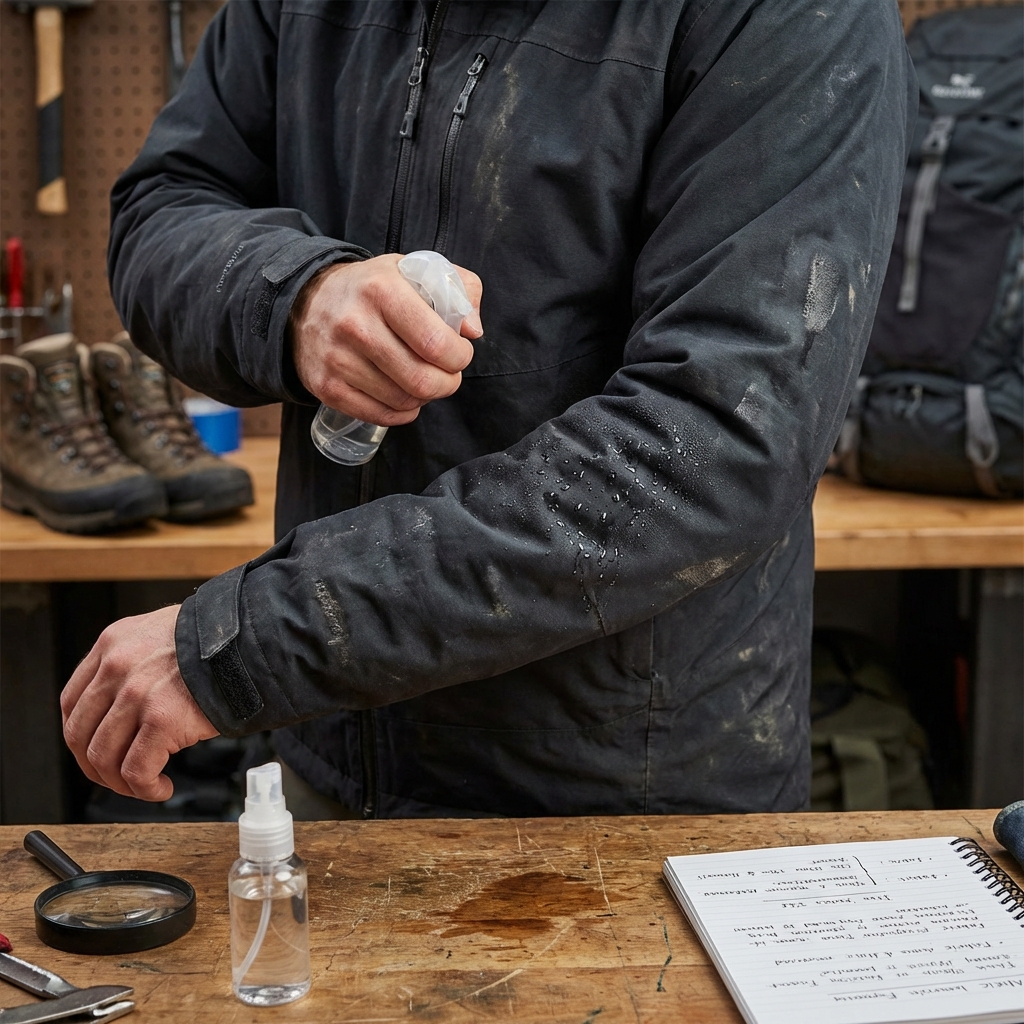
This is the most intuitive test and takes two minutes. Grab a spray bottle filled with clean water and spray a small section of the jacket’s outer fabric. Watch how the water behaves.
Good DWR causes water to bead immediately into distinct droplets that roll right off. They don’t soak in. If water beads perfectly and rolls away when you tilt the jacket, the DWR coating is in solid condition.
If water spreads out and soaks into the fabric instead of beading, the DWR is faded or gone. The water sits on the surface or slowly seeps in. This doesn’t automatically mean the jacket is failed—remember, the membrane underneath can still protect you—but it does mean the first line of defense is weakened.
Test multiple areas of the jacket: the back, sleeves, chest, and sides. DWR wears unevenly, so one area might still have good repellency while another is nearly gone. Note where the coating is strongest and where it’s weakest. This information tells you where wear has been heaviest.
If the DWR is mostly gone but the fabric isn’t physically damaged, this is easily restored with a DWR reapplication treatment. We recommend treating your jacket annually or after heavy use to maintain performance.
Pressure Testing Methods We Recommend
Water droplets rolling off is good, but real-world rain doesn’t just gently bead on fabric. It comes with wind, pressure, and persistence. Testing under pressure tells you if the membrane and seams will actually hold.
The simplest test is the hose method. Hold the jacket up, then spray a steady stream of water from a regular garden hose onto a single area for 10-15 seconds. Apply moderate pressure, like light to medium rain. Watch the inside of that area—or better yet, have someone wear the jacket or hold it over their arm. If water beads on the outside but stays out, the membrane is doing its job. If water starts seeping through to the inside within seconds, the membrane or seams are failing.
For a more thorough assessment, fill a spray bottle with water and pump it hard to create heavy mist and fine spray. Hold this against the fabric for several minutes, focusing on seams, the shoulder, and the hood. These are high-pressure points on the trail. A healthy technical jacket shrugs off this test.
The collar and cuff seals deserve their own attention. Spray water directly at the sealed edges and neck. If water creeps in around seam tape or into the cuff, that’s a repairable issue but one that needs addressing before hard rain.
Pay particular attention to the underarm area and any repairs or patched sections. These are weak points that often fail first. If you find water penetrating at a previous repair, you know that spot needs reinforcement or professional resealing.
Seam Taping Assessment and Durability
Every needle hole we make in a waterproof jacket is an invitation for water to find its way through. That’s why we fully tape the critical seams on our technical shells. The tape is literally glued to cover every stitch and prevent water infiltration.
Inspect all seams visually first. Run your fingers along the inside of the jacket and feel for the tape. It should be smooth, flat, and fully adhered to the fabric. Lift the tape gently with your fingernail or a credit card edge to see if it’s peeling away. Loose tape means water can eventually work underneath.
Look for any cracks, gaps, or missing sections of tape. Even a small gap can let water through under pressure. Seams that have been flexed repeatedly, like underarm gussets or hood seams, are most likely to fail.
For active testing, run water along a seam while watching the opposite side. If water appears on the inside while it’s running along the outside seam, the tape has failed. Do this test on multiple seams: shoulders, sides, hood, and cuffs. The more seams you test, the clearer the picture becomes.
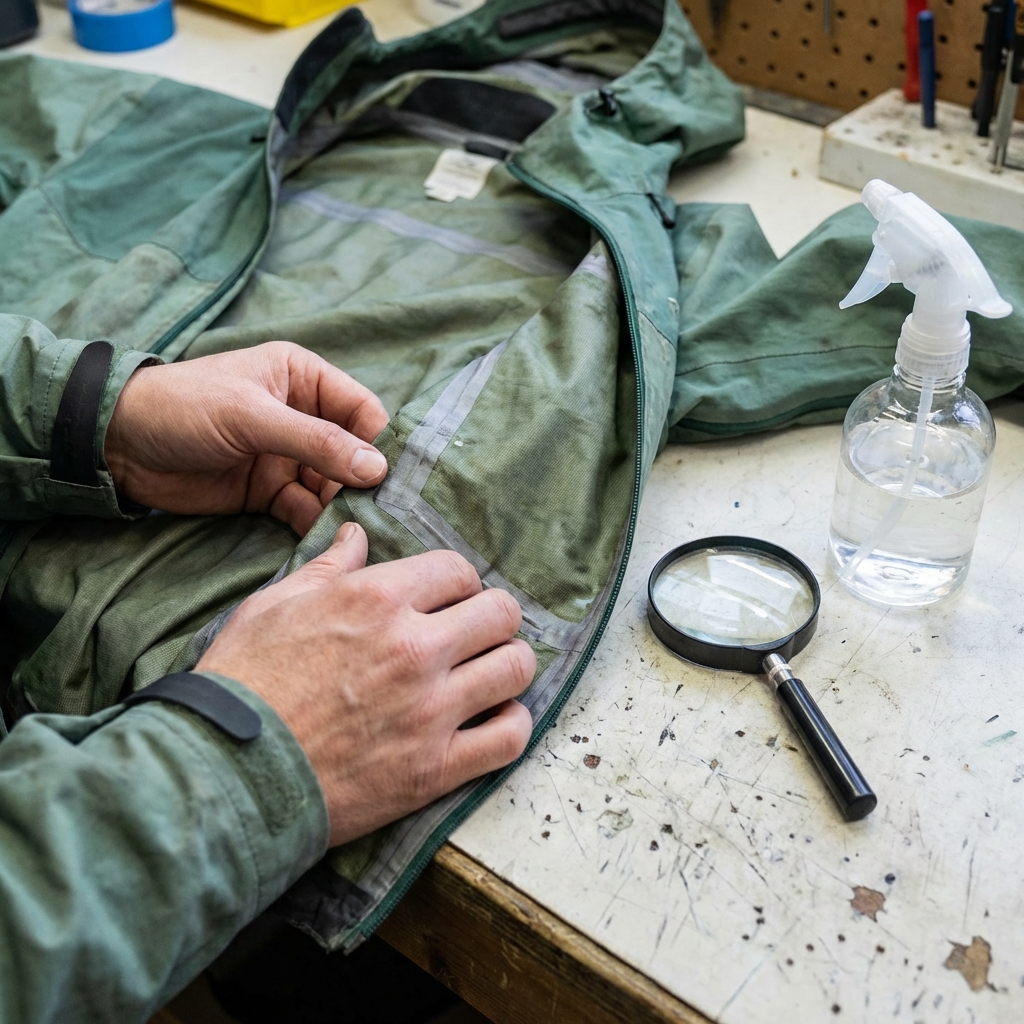
If seam tape is peeling or cracked, it’s worth repairing with seam sealer. Professional reapplication or DIY seam sealer products can restore this critical protection. This is almost always worth doing if the rest of the jacket is solid.
Restoring Performance With Our Care Solutions
If your testing reveals faded DWR but an intact membrane and seams, restoration is straightforward. We offer dedicated care products designed to bring used jackets back to full performance.
Our DWR treatment products work by reapplying the water-repellent finish to the outer fabric. Most require washing the jacket first, then treating it in the wash or through spray application. Follow the product instructions carefully. Reapplied DWR typically lasts through several washes before needing renewal again.
For compromised seam tape, seam sealer applied to the inside of the jacket’s seams can restore the seal. This is a meticulous job, but our care guides walk you through the process. If you prefer professional service, we recommend having it done rather than leaving leaking seams unaddressed.
If the membrane itself is damaged, that’s a different story. Membranes cannot be reliably repaired at home. Small punctures might be sealed with patch kits designed for waterproof fabrics, but widespread membrane failure means replacement or professional repair is necessary.
We also recommend laundering used jackets properly before testing. Old sweat, dirt, and body oils can affect water beading and mask the jacket’s true condition. A gentle wash with technical fabric cleaner can reset your assessment.
When to Replace vs When to Repair
This depends on the jacket’s cost, the extent of damage, and your attachment to the piece. A good framework: if multiple major systems are failing, replacement is smarter than chasing repairs.
Replace the jacket if:
- The membrane has multiple punctures or is degraded over a large area
- Seams are failing in multiple locations and showing signs of stress
- The outer fabric is severely abraded or torn in ways that compromise structural integrity
- Previous repairs have failed and the jacket shows a pattern of weak points
Repair the jacket if:
- Only the DWR is faded; the membrane and seams are solid
- Seam tape is peeling but localized to one or two areas
- There’s a single puncture or small tear in the membrane that can be patched
- The jacket has sentimental value or fits you perfectly
We stand behind our technical outerwear because we’ve built it to endure heavy use. Even older pieces are worth restoring if the core waterproofing system is intact. A jacket with fresh DWR and sealed seams can serve you reliably for seasons to come.
Our Commitment to Quality Pre-Owned Gear
We believe high-performance gear shouldn’t require a new purchase every season. That’s why we’ve invested in a resale program that gives our pieces a second life with explorers who value durability and sustainability.
When we process pre-owned jackets for resale, we conduct thorough waterproofing assessments on every piece. We test DWR, inspect membranes, verify seam integrity, and photograph any wear or damage. Our listings are transparent about condition so you know exactly what you’re buying.
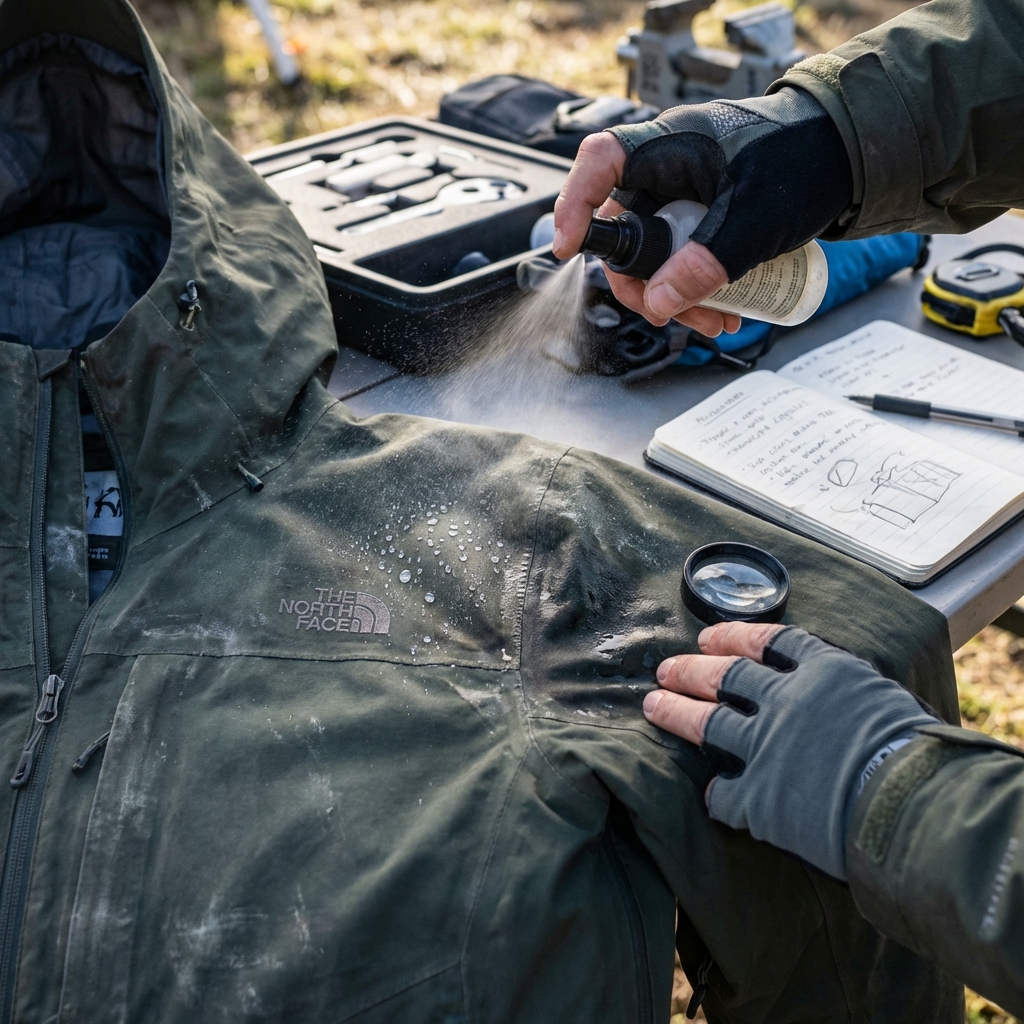
If a jacket passes our testing but needs minor restoration, we handle that before listing. Fresh DWR treatment and seam resealing are standard care for pre-owned technical shells in our inventory. This means when you buy a used jacket from us, you’re getting a piece that’s already been vetted and refreshed.
We also stand behind what we sell. If a jacket you purchase develops leaks due to a defect we should have caught, we make it right. Our reputation is built on gear that works, not shortcuts.
Testing Tips From Our Expert Community
Our athletes and field testers have shared techniques that go beyond the basics. One pattern we’ve noticed: testing in variable conditions reveals more than controlled lab settings. Spray water from different angles—overhead like rain, horizontally like wind-driven rain, and upward like mist bouncing off rocks.
Don’t just test the outer shell. Test the hood fit and how it channels water. Pour water over the hood and watch whether it diverts away from your face or streams in. This matters more than any lab measurement when you’re on a wet ridge.
Check the pit zips and vents if your jacket has them. These areas are sealed seams that also need to shed water. Water running through an unzipped pit zip doesn’t mean failure, but water coming through the seal when zipped is a problem.
Pressure-test while wearing the jacket if possible. Movement, flexing, and the slight shape your body creates change how water behaves on fabric. A seam that seems fine in your hands might leak when you’re actively hiking and that area is stretched.
One more insight: test in cool conditions if you can. Cold temperatures make waterproof membranes slightly stiffer and can reveal limitations that warm testing might miss. If it works when cold, you’re in good shape.
Your next step is straightforward: grab a used jacket you’re considering, run through these tests, and make an informed decision. You’ll know exactly what protection you’re getting and whether restoration or replacement makes sense. We’re here to support whatever you choose, whether that’s guidance on repairs or connecting you with a fresh piece through our resale program.
For further reading: Breithorn Hoodie.
Ready for your next adventure? Gear up with apparel and equipment built for the wild. Explore the collection now.
Frequently Asked Questions (FAQ)
How can we tell if a used jacket’s waterproofing is still effective?
We recommend starting with our visual inspection method to check for coating degradation, then performing the water droplet test on both the exterior and seams. If water beads up and rolls off, you’re in good shape. If it soaks in or sits flat, that’s a sign the DWR coating needs refreshing or the membrane itself may be compromised.
What’s the difference between DWR and the waterproof membrane, and why do we need both?
Our DWR coating is the first line of defense that makes water bead up and shed quickly, while our waterproof membrane underneath blocks water from penetrating the fabric itself. Think of DWR as the bouncer and the membrane as the locked door. The DWR wears out over time, but we can restore it with our care solutions. If the membrane fails, that’s when replacement becomes necessary.
Can we restore waterproofing on a jacket we already own, or do we need to buy a new one?
We can absolutely bring your jacket back to life. If the DWR coating is worn down, we offer treatments that restore water repellency. For more serious issues like failed seams or membrane damage, our team can assess whether repair or replacement makes sense for your specific jacket and how you use it.
Leave a Reply