Table of Contents
- Why Your Favorite Down Puffer Loses Its Water Resistance
- Understanding Down Insulation and DWR Coatings
- Signs Your Puffer Needs Re-waterproofing Treatment
- What You'll Need for Our At-Home Refresh Process
- Step-by-Step Guide to Cleaning Your Down Puffer
- Applying DWR Treatment Like a Pro
- Drying and Fluffing for Maximum Loft Recovery
- Why Professional-Grade Products Make the Difference
- Extending the Life of Your Technical Gear
- Common Mistakes That Damage Down Insulation
- Frequently Asked Questions (FAQ)
Why Your Favorite Down Puffer Loses Its Water Resistance
Your down puffer has earned its place in your rotation. It’s been with you through alpine starts, unexpected downpours, and that brutal stretch above treeline. But lately, water beads up less readily on the shell. Rain starts soaking through instead of rolling off. The loft feels a touch flatter than it used to. You’re not imagining it, and the jacket isn’t done for. The water-repellent coating that protects down insulation degrades over time with use, washing, and UV exposure. The good news is we can restore that performance at home using straightforward techniques and the right products.
The outer shell of your puffer isn’t naturally water-resistant. We apply a durable water-repellent (DWR) finish to the fabric during manufacturing. This coating causes water to bead and roll away rather than soak in. Think of it like wax on a car: over time, friction, detergents, and sunlight wear it down.
Down insulation itself is vulnerable when wet. Water collapses the air pockets that trapped warmth, and the insulation clumps. That’s why we layer DWR protection on top. But here’s what happens: every trip into the backcountry, every run through a washing machine, every sunny day in your pack slowly strips away that invisible shield. Sweat, sunscreen, and environmental contaminants accelerate the process. Within one to two seasons of active use, most puffers lose noticeable water shedding ability.
The layer doesn’t disappear completely all at once. Instead, it fades gradually. You’ll notice it first on high-contact areas like shoulders and collar, where friction is greatest. Once you recognize those signs, restoration is both simple and crucial to keeping your jacket performing in the conditions where you need it most.
Understanding Down Insulation and DWR Coatings
We stuff our puffers with either 700-fill or 800-fill down (measured in ounces per pound of down weight). Higher fill power means the down clusters are more lofted and efficient, trapping more warm air in less space. But that insulation only works when it’s dry.
DWR coatings are polymer-based treatments applied to fabric fibers. They make the surface oleophobic and hydrophobic, meaning water and oils slide off. Most of our jackets use fluorocarbon-free DWR, which maintains performance without persistent environmental chemicals. The coating bonds to the fabric but doesn’t create a waterproof seal like taped seams or membranes do. Its job is simpler and essential: keep the outer shell dry so down stays lofted.
Over time, the coating weakens because:
- Body oils and sweat residue build up on the fabric
- Detergent residue from washing coats the fibers
- UV rays break down the polymer chains
- Mechanical abrasion from pack straps and pack movement degrades the surface
Reapplying DWR revives that property without replacing any down or shell material. It’s the easiest way to restore an aging puffer to nearly new performance.
Signs Your Puffer Needs Re-waterproofing Treatment
Water beading is the clearest sign. Fill a sink or spray bottle with clean water. Sprinkle a few drops on the outer shell in a few spots. Fresh DWR-treated fabric will form tight beads that roll off almost immediately. If water spreads flat, wicks into the weave, or takes more than a few seconds to bead, your DWR is fading.
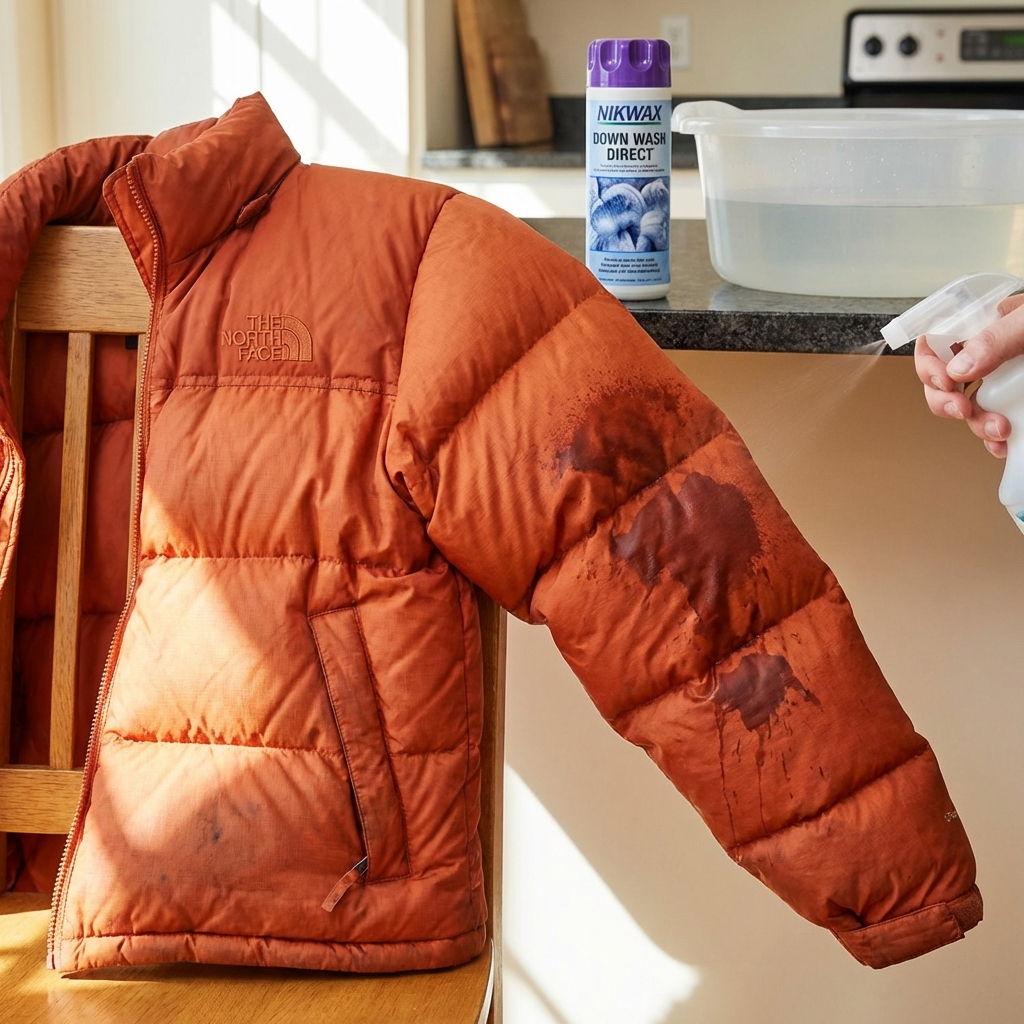
You might also notice the jacket feeling heavier after light rain, or dampness appearing at your shoulders and back after a few hours in wet conditions. The loft may seem slightly compressed compared to when you first bought it. Some people describe it as the jacket feeling a touch less “puffy,” though that’s often more perception than reality.
Timing matters. If you use your puffer year-round or take it on monthly trips, plan for DWR refresh every 12 to 18 months. Less frequent users might stretch it to two years. We recommend testing with the water-bead method twice a year if you’re unsure. Catching the decline early means easier restoration and better protection during that next trip when weather turns.
What You’ll Need for Our At-Home Refresh Process
You don’t need much, and you likely have some items already. Grab a large basin or your washing machine, cool water, a gentle down-specific detergent (or a technical gear wash like Nikwax Tech Wash), a soft sponge or cloth, and our DWR treatment. We recommend products designed for down gear rather than general fabric sprays; they’re formulated to work with the delicate nature of down-insulated construction.
For drying, you’ll want access to a dryer with a low-heat tumble setting, or a well-ventilated space where you can hang the jacket and occasionally reshape it by hand. A tennis ball or two in the dryer helps fluff the down during the final stage. Avoid dryer sheets and fabric softeners, which coat fibers and reduce DWR effectiveness.
Optional but helpful:
- A gentle brush for stubborn spots
- A spray bottle for targeted DWR application
- A mesh laundry bag to protect the jacket during machine washing
- A clean, dry towel for excess water removal
Setting aside one evening for the full process is realistic. The actual hands-on work takes 20 to 30 minutes; the rest is waiting for rinses, treatment application, and drying time.
Step-by-Step Guide to Cleaning Your Down Puffer
Start by examining your jacket for stains, odors, or visible dirt. Check pockets and remove anything stored inside. If you see major stains, spot-clean them with a damp cloth and gentle soap before proceeding.
Fill your basin or washing machine with cool water (cold is fine; hot damages down and reduces DWR effectiveness). Add a capful of down-specific detergent or technical gear wash. The goal isn’t a bubble bath; gentle agitation removes body oils and residue without harsh scrubbing. Machine-wash on a delicate or permanent-press cycle, or hand-wash by submerging and gently swishing the jacket for two to three minutes.
Drain and rinse thoroughly. This step is important and often rushed. Down holds detergent residue stubbornly. Rinse at least twice, squeezing gently (never wring) to remove soapy water. Keep rinsing until the water runs clear. Residual detergent blocks DWR from bonding properly, so patience here pays off.
Once the water runs clean, gently squeeze out excess water. Press the jacket against the basin or sink edge rather than twisting it. Lay it on a clean towel and pat dry. You’re aiming for damp, not soaking wet, before moving to treatment application.
Applying DWR Treatment Like a Pro
Read your DWR product’s instructions first; application methods vary slightly. Most spray-on treatments are applied to damp fabric. Some are mixed into the rinse cycle; we’ll focus on the spray method since it gives you control over coverage.
Hang your damp jacket on a sturdy hanger in a well-ventilated space outdoors or in a garage. Shake it gently to even out the down. Spray the DWR evenly across all outer surfaces, holding the bottle 6 to 8 inches away. Work systematically: front panels, back, sleeves, hood if applicable. Cover the entire exterior. Don’t oversaturate any one spot; you want light, even coverage.
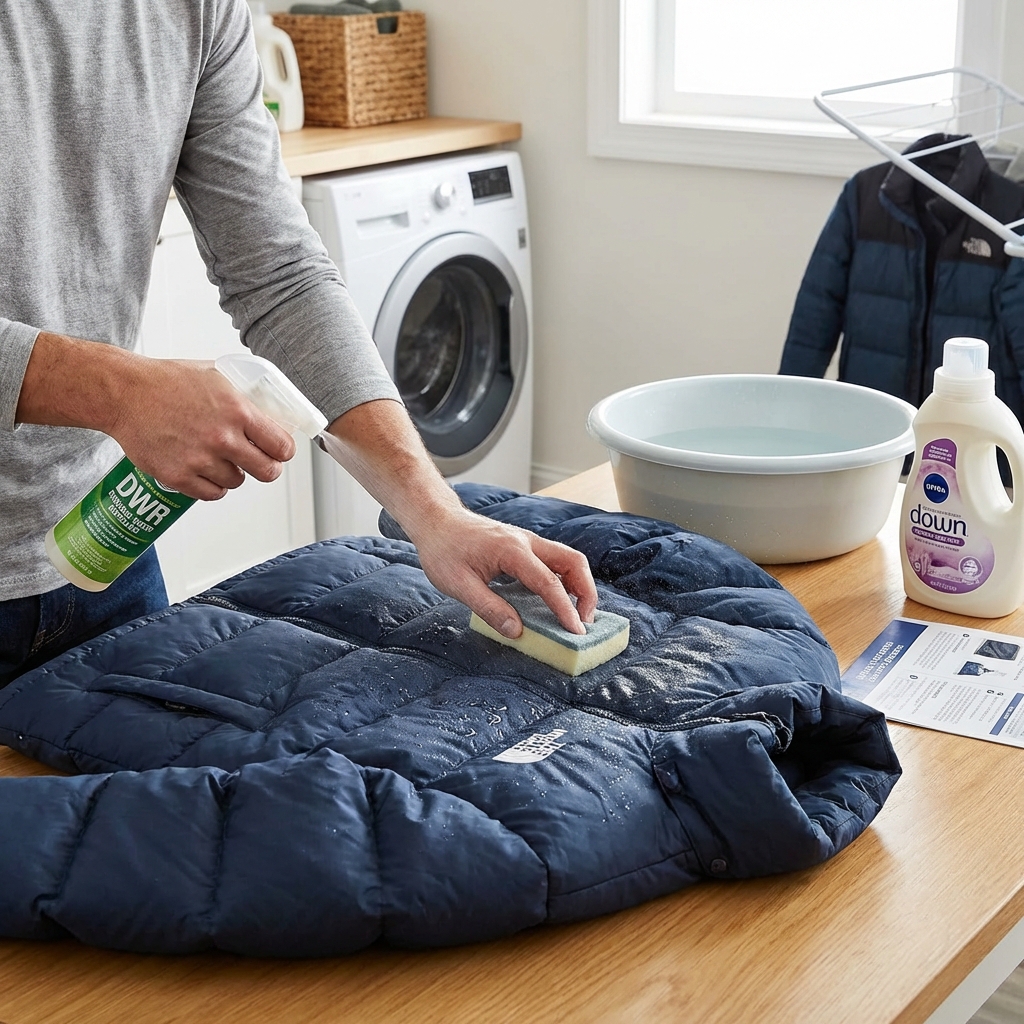
Pay special attention to high-wear areas: shoulder seams, collar, the upper back where a pack strap sits. These spots see friction and lose DWR first. A second light pass over these zones helps restore coverage where it matters most.
Let the treatment air-dry fully. Most products need 24 hours of air drying to cure and bond properly. Don’t put the jacket away damp or in direct sunlight during this window. Once dry, run your water-bead test again to confirm coverage. Water should bead up and shed within seconds.
Drying and Fluffing for Maximum Loft Recovery
After DWR application has cured, move to heat-assisted drying if you want the down to fully re-loft. This step is optional but valuable. Place the jacket in your dryer on low heat or air-only setting. Add one or two tennis balls (clean, no dye). The balls tumble against the down, breaking up any remaining clumps and helping the fill power re-express itself.
Run the dryer for 20 to 30 minutes on low heat, or 40 to 50 minutes on air-only. If your dryer has a “perma-press” setting, that’s ideal. Stop and check progress halfway through, reshaping the jacket by hand if needed. Down should feel lofted and puffy, not compressed or damp.
Remove the jacket and hang it again for another hour to cool and fully expand. The down will shift slightly as it cools, so let it settle. You should notice a visible difference in fluffiness compared to the damp state before drying.
This heat-tumble process also helps the DWR cure completely, hardening the protective layer. Once the jacket is fully dry and cool, test the water beading again. You should see tight beads forming and shedding immediately across the entire shell.
Why Professional-Grade Products Make the Difference
We field-test our recommendations extensively. Consumer-grade water-repellent sprays often contain silicone or wax compounds that work on nylon but can leave residue on down garments, altering breathability and feel. Professional-grade DWR products designed for technical insulated gear bond more effectively to the specific fabrics we use and don’t alter the jacket’s handling or performance.
The fluorocarbon-free DWR treatments we endorse work just as well as older PFC-based formulas without contributing to environmental contamination. They’re also often more durable, lasting longer between refresh cycles. Investing in a quality product means you’ll repeat this process less often and your jacket will perform more reliably in the field.
Cheap detergents and fabric softeners may seem economical upfront, but they leave coating residue that actually reduces DWR effectiveness. We recommend using the same technical-gear detergent brands we trust for general washing. Consistency matters here: the products have been engineered to work together.
Extending the Life of Your Technical Gear
Storage habits matter as much as cleaning. Keep your puffer in a breathable cotton or mesh storage bag during off-season, not compressed in a vacuum sack. Prolonged compression damages the down structure and makes it harder for insulation to re-loft. A cool, dry closet is ideal. Avoid basements prone to moisture or attics subject to heat extremes.
Between trips, hang your puffer outside for an hour or two to air out. Body moisture and odors dissipate naturally, extending the time between full washes. Minor dirt and dust shake out easily. This simple habit cuts your washing frequency in half, which directly extends DWR coating life since every wash slightly diminishes it.
Inspect your jacket regularly. If you notice loose stitching, small tears, or seam separation, address these immediately. A small tear in the shell or lining can let down escape and allow water intrusion. We offer repair services, or a skilled tailor familiar with down gear can patch most issues inexpensively. Catching damage early prevents larger problems.
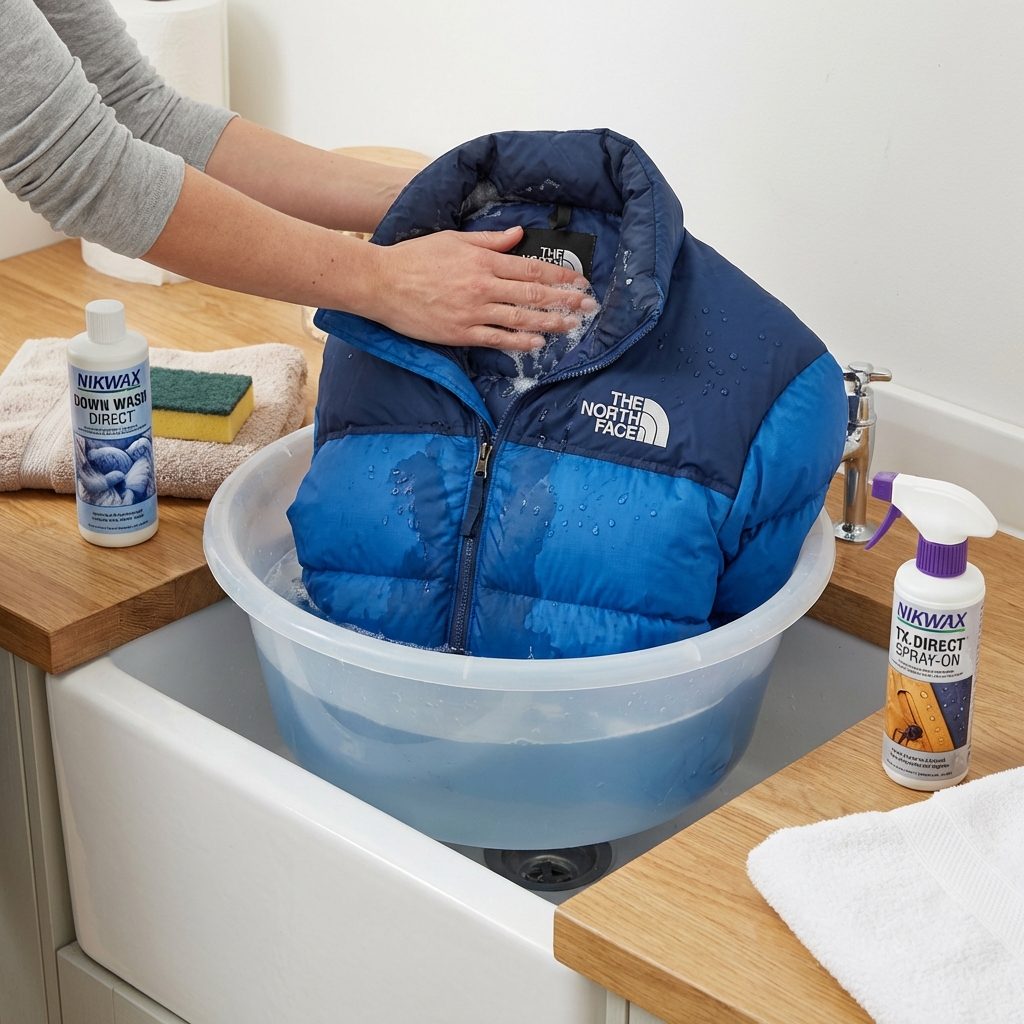
Consider rotating puffers if you use them heavily. We design jackets like our Nuptse Jacket for long-term durability, but even the best gear performs better when it gets a break between seasons. This approach reduces wear on any single jacket and spreads maintenance across several pieces.
Common Mistakes That Damage Down Insulation
Hot water is the enemy. It damages down protein structure and accelerates DWR degradation. We always recommend cool or lukewarm water. Even warm water can reduce the lifespan of your jacket significantly.
Never dry-clean down jackets, even if a cleaner insists it’s safe. Dry-cleaning solvents strip DWR, dry out down, and leave chemical residue. Machine washing on gentle settings or hand washing is always the right call.
Wringing or twisting the jacket forces water deeper into down clusters and can rupture the down itself, causing feather leakage. Squeeze gently or press against a sink edge. It takes longer, but the jacket stays intact.
Oversaturating with DWR spray creates buildup that can make the fabric stiff or slightly uncomfortable. Light, even coatings work better than heavy ones. One to two thin passes is better than one heavy application.
Skipping the rinse cycle after washing is probably the most common mistake we see. Detergent residue blocks DWR from bonding properly, and you’ll wonder why your treatment didn’t work. Rinse until the water truly runs clear. Patience here directly impacts performance.
Finally, don’t assume your puffer is ruined if water stops beading. Water resistance is a maintenance item, not a permanent property. A 30-minute restoration effort with this process brings aging jackets back to solid performance. We’ve designed our puffers to last years of active use with proper care. Stay proactive about DWR refresh, and your trusted jacket will keep protecting you through countless seasons ahead.
Ready for your next adventure? Gear up with apparel and equipment built for the wild. Explore the collection now.
Frequently Asked Questions (FAQ)
How often should I reproof my down puffer to keep it performing like new?
We recommend re-waterproofing your puffer every 1-2 seasons of regular use, depending on how frequently you’re out in wet conditions. You’ll notice water beading on the fabric less effectively when the DWR coating starts to wear down, so that’s your cue to refresh it. The good news is that our at-home treatment process takes just a couple of hours and costs far less than replacing a jacket.
Can I machine wash my down puffer, or will that damage the insulation?
You can safely machine wash your down puffer on a gentle cold cycle if you use a specialized down-specific detergent, which we detail in our cleaning guide. The key is avoiding regular laundry detergent and fabric softeners, as these break down the natural oils in the down and reduce its loft and warmth. We always recommend checking your jacket’s care tag first, since some of our specialty pieces may have specific requirements.
What’s the difference between using our professional-grade DWR products versus cheaper alternatives?
Our formulations are engineered specifically for technical fabrics and down-filled gear, so they bond properly with the materials and maintain breathability while restoring water resistance. Cheaper products often leave a stiff residue or wash out quickly, which means you’re spending money on repeated treatments instead of getting lasting performance. We design our products to work with your gear’s construction, not against it.
Leave a Reply