Table of Contents
- Inspect Your Puffer for Damage Before Washing
- Use Cold Water and Gentle Detergent for Down
- Hand Wash Versus Machine Wash: Finding Your Method
- Rinse Thoroughly Until Water Runs Clear
- Squeeze Out Excess Water Without Wringing
- Air Dry Your Down Puffer Completely
- Fluff and Restore Loft During the Drying Process
- Frequently Asked Questions (FAQ)
Inspect Your Puffer for Damage Before Washing
Your down puffer jacket has earned its keep. It’s been your shield on alpine starts, your trusted layer on backcountry pushes, and the thing you grab without thinking when the temperature drops. That’s exactly why keeping it clean and properly maintained matters so much. Down insulation loses its loft and warmth when oils and dirt build up in the fibers, and a neglected jacket simply won’t perform the way we designed it to.
We know that washing technical gear feels intimidating. The stakes feel high, and one wrong move could damage something you depend on. Here’s the good news: washing your down puffer at home is completely manageable when you follow the right steps. We’ve guided thousands of our customers through this process, and the result is always the same—a refreshed jacket that performs like new. Let’s walk through each stage so your gear stays trail-ready for years to come.
Before water touches your jacket, take five minutes to do a full damage assessment. Look closely at all seams, zippers, and the shell fabric itself. Run your hands along the chest, shoulders, and sleeves, checking for small tears, snags, or worn spots where the outer material has started to fray.
Pay special attention to the collar, cuffs, and hem where friction is highest. If you spot any damage, address it now. A tiny hole becomes a major problem once you introduce water and agitation. We recommend using a seam sealer or fabric repair kit before washing if you notice any compromised areas. For zipper issues, a small amount of silicone-based lubricant applied to the slider teeth will get things running smoothly again.
Check the care label stitched inside your jacket. Most of our down products specify cold water washing and recommend against dry cleaning, which can strip natural oils from down and damage the shell. Knowing your jacket’s specific requirements upfront saves you from guessing mid-wash.
What to do next: Take a photo of any damage spots so you can monitor them during and after washing. This gives you a baseline to compare against.
Use Cold Water and Gentle Detergent for Down
Temperature control is the foundation of down care. Cold water protects both the insulation and the shell fabric. Hot water can cause the down to mat, the shell fabric to shrink, and the whole jacket to lose its carefully engineered fit.
When it comes to detergent, skip the heavy-duty stuff. Regular laundry detergent is too harsh and leaves residue that traps moisture in the down. We recommend using a specialized down-specific detergent or a gentle, pH-neutral product designed for technical fabrics. These products clean effectively without the surfactants and perfumes that break down down’s natural properties.
Measure carefully. You only need a small amount, roughly half what you’d use for a normal load. Too much soap means more rinsing, and inadequate rinsing leaves buildup that dampens insulation performance. Our technical team suggests about one-quarter cup per wash for a jacket.
Fill your sink or basin with cold water and dissolve the detergent completely before submerging your jacket. This prevents concentration of soap on any single area.
What to do next: Test your detergent on a hidden seam first if you’re using something new. This gives you confidence before committing to the full wash.
Hand Wash Versus Machine Wash: Finding Your Method
We support both methods, but they work best for different situations. Your choice depends on your jacket’s construction and your comfort level.
Hand washing is gentler and gives you complete control. Fill a basin with cool soapy water, submerge your jacket fully, and work the soapy water through the fabric using gentle pressing and squeezing motions for 5-10 minutes. Pay extra attention to high-wear zones like underarms, collar, and the front zipper area where sweat and dirt accumulate. Hand washing is the safer option if your jacket has any questionable seams, older construction, or if you simply want maximum protection.
Machine washing works well for newer down jackets with reinforced seams and modern construction, especially if the jacket is lightly soiled. Use the delicate or hand-wash cycle with cold water. Skip the agitation settings and absolutely do not use the spin cycle. Place your jacket inside a mesh laundry bag to reduce direct friction against the drum.
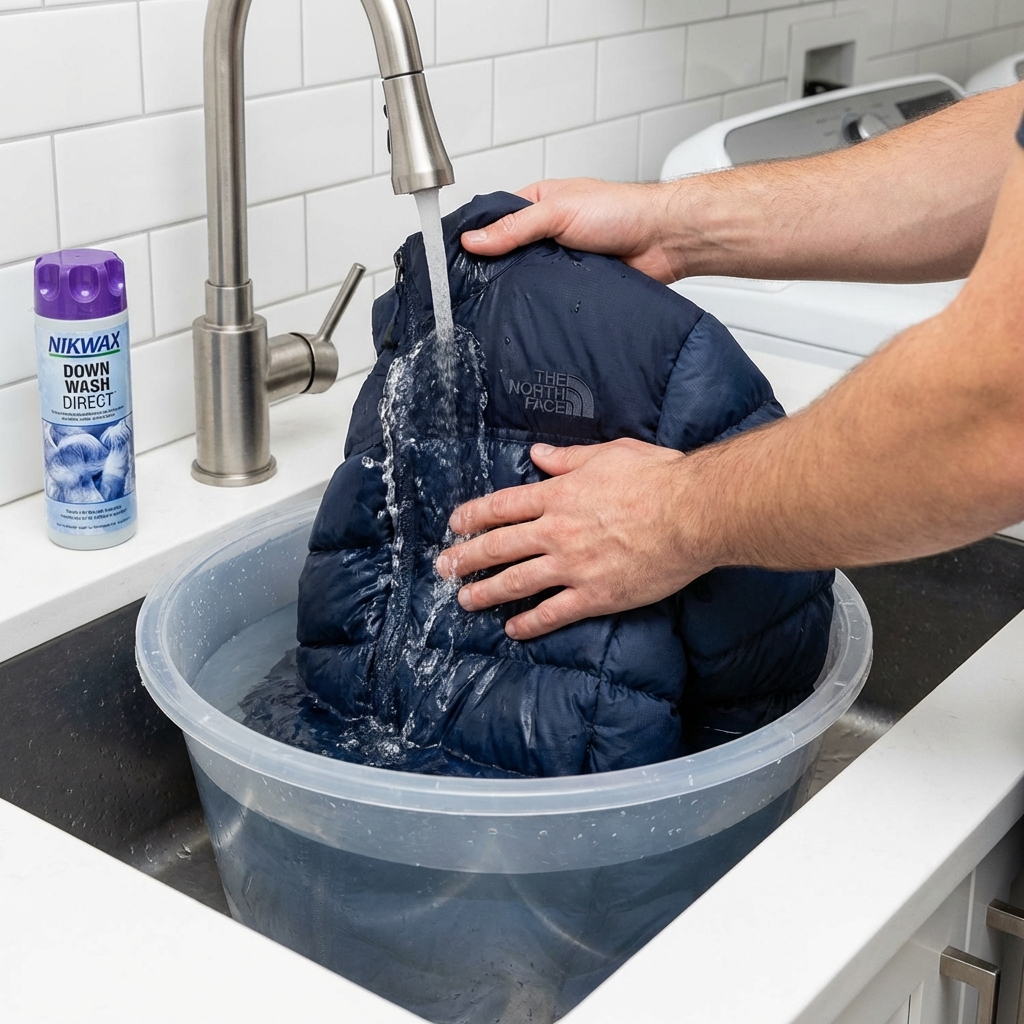
Most of our customers who wash jackets regularly choose hand washing for the peace of mind and superior control. You’ll spend maybe 15 minutes of active time, and the results speak for themselves. A jacket that’s been hand-washed feels fresher and performs noticeably better than one that’s gotten the machine treatment repeatedly.
What to do next: Start with hand washing if this is your first time. You’ll learn your jacket’s unique needs and feel confident enough to choose machine washing next time if you want to.
Rinse Thoroughly Until Water Runs Clear
This step separates a properly maintained jacket from one that will gradually lose performance. Rinsing completely removes all detergent residue, which is critical because even tiny amounts of soap left in the down will attract moisture and reduce loft.
After your initial wash, drain the soapy water and refill the basin with fresh cold water. Submerge your jacket again and gently work the clean water through the fabric, pressing and squeezing to push out remaining soap. You’ll feel the jacket become slippery as the water flushes the detergent out.
Repeat this process at least 3-5 times, or until the water running out of your jacket is completely clear with no soap film visible. This sounds like a lot, but down’s porous nature means soap clings to it. Rushing this step is one of the most common mistakes we see, and it directly impacts your jacket’s breathability and warmth.
Pay special attention to seams and the hood area, where soap can pool. Gently press these sections under running water to ensure complete rinsing. You should feel zero slickness in the fabric by your final rinse.
What to do next: Use your kitchen sink faucet for the final 1-2 rinses. Running water is faster and more thorough than basin submersion for that final stage.
Squeeze Out Excess Water Without Wringing
Your instinct might be to wring out your jacket like you would a cotton towel. Don’t. Wringing compresses the down unevenly, damages the shell fabric, and can tear seams that are weakened by saturation.
Instead, gently squeeze sections of your jacket in your hands. Cradle the jacket against your body and softly compress sections between your palms. Work your way from the shoulders down to the hem, then repeat with the sleeves. The goal is to remove free water without applying twisting or stretching force.
After the first squeeze, lay your jacket flat on a clean, dry towel. Gently press down across the entire jacket surface with your hands to absorb more water into the towel. Flip it over and repeat. This process removes significant moisture without any wringing motion.
Your jacket should feel damp but not dripping when you pick it up. A small amount of water remaining is actually fine. The air-drying process will handle the rest and distribute moisture evenly.
What to do next: Use multiple towels if your first towel becomes waterlogged. A second towel will absorb more water more efficiently than pressing repeatedly with a saturated one.
Air Dry Your Down Puffer Completely
Heat and dryers are down’s enemies. Machines damage the shell, melt synthetic fibers, and bake moisture into the insulation. We always recommend air drying, and it’s actually faster than you might think.
Hang your jacket on a sturdy, padded hanger in a well-ventilated space away from direct sunlight or heat sources. A bedroom, hallway, or garage works perfectly. Make sure air can circulate freely around the entire jacket. If humidity is high in your home, crack a window or run a fan nearby to speed drying and prevent musty smells.
The drying timeline depends on humidity and airflow. In ideal conditions with good ventilation, most jackets dry fully in 24-48 hours. In humid climates, give it 2-3 days. Patience here prevents damage and ensures even moisture distribution throughout the down.
Check your jacket periodically by touch. The shell will dry before the inner down insulation, so don’t assume everything is dry just because the outer layer feels crisp. Interior down should feel dry to the touch with no dampness remaining.
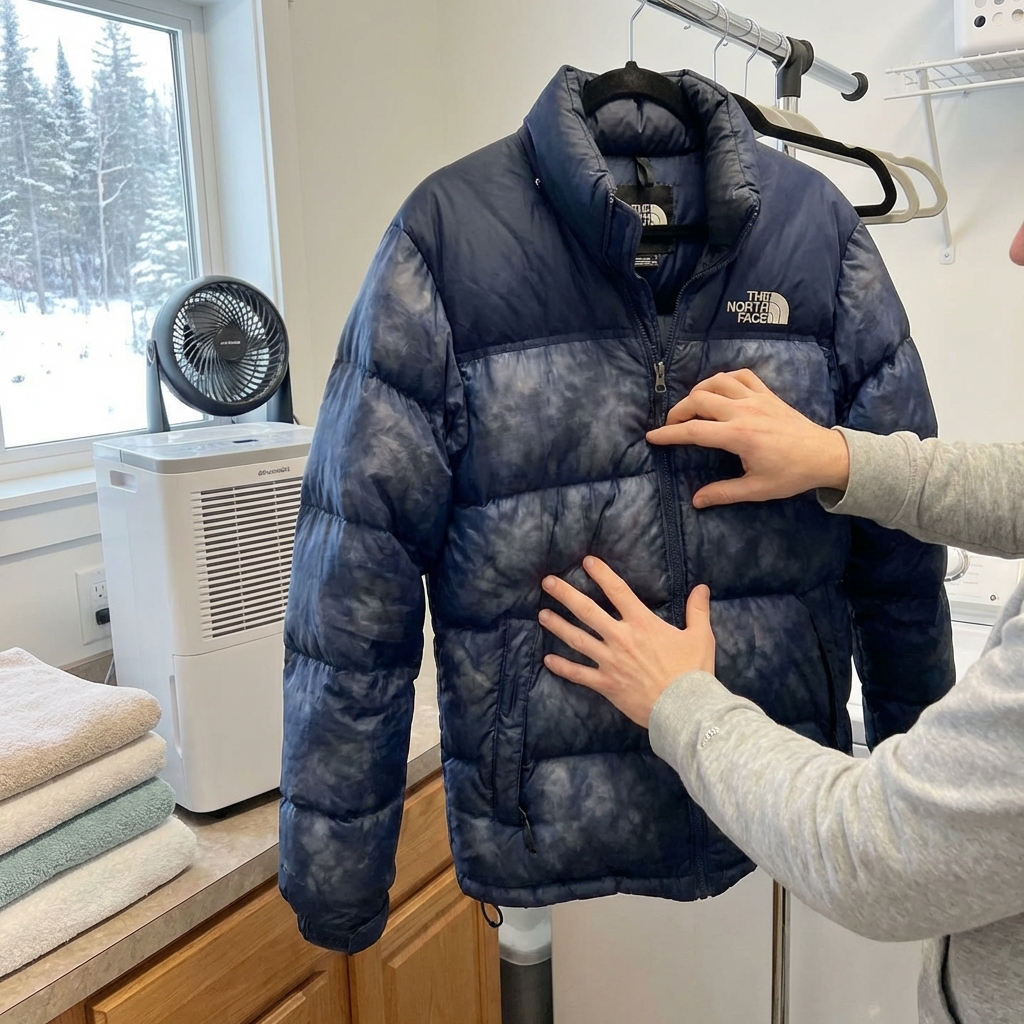
What to do next: Hang your jacket where you’ll see it regularly. This reminds you to give it a gentle fluff every few hours, which brings us to our final and most important step.
Fluff and Restore Loft During the Drying Process
This is where your jacket comes back to life. While your puffer hangs, the down inside is settling and potentially clumping. Periodic fluffing re-distributes the insulation and restores the loft that gives your jacket its warmth and performance.
Starting about 4-6 hours after hanging, gently massage and squeeze the jacket every few hours. Work your hands through the different baffle sections, gently pressing to break up any clumping you feel. This feels a bit like squeezing a pillow, and that’s exactly the right motion. You’re encouraging the down to redistribute naturally rather than settling in clumps.
If you have access to a clothes dryer, use it on the lowest heat setting or air-only setting for 10-15 minute intervals between hangings. The tumble action helps fluff down quickly without heat damage. Run it on air-only or low heat only, never medium or high. Most modern dryers have an air-only delicate cycle that’s perfect for this. Pull your jacket out midway to hand-fluff it as well.
Continue fluffing every 4-6 hours until your jacket feels fully lofted and bouncy when you gently press it. This typically takes 24-48 hours of periodic attention. A properly fluffed jacket will feel noticeably fuller and warmer than one you simply hang and leave alone.
We’ve designed our down-filled jackets to respond beautifully to this process. Once you’ve gone through one complete wash and fluff cycle, you’ll feel the difference in performance immediately. That bounce and responsiveness is what separates a maintained down jacket from a compressed, inefficient one.
What to do next: Set phone reminders for fluffing intervals if you tend to forget. Consistent attention during this final stage directly translates to better warmth and durability for seasons to come.
—
Your down puffer represents an investment in reliability and performance. We stand behind every stitch, every seam, and every bit of down we use in our jackets because we’ve tested them in conditions where performance truly matters. When you care for your gear the way we’ve outlined here, you’re protecting that investment and ensuring your jacket performs exactly as we engineered it to.
The process feels like a lot on first read, but once you’ve washed one jacket, the rhythm becomes second nature. Most of our most experienced customers tell us they actually find the process meditative. You’re handling gear you trust, restoring something that’s earned its place in your kit, and setting yourself up for seasons of reliable warmth and protection.
Start your first wash this week. Follow each step deliberately, and you’ll emerge with a jacket that feels renewed and ready for your next adventure. That’s the North Face promise: gear built to last when you care for it properly.
Ready for your next adventure? Gear up with apparel and equipment built for the wild. Explore the collection now.
Frequently Asked Questions (FAQ)
Can I machine wash my North Face down puffer jacket?
We recommend hand washing whenever possible to protect your jacket’s integrity, but many of our down jackets can handle a gentle machine wash cycle with cold water. Before tossing it in, check your garment’s care label to confirm machine washing is safe for your specific jacket. If you do machine wash, use a delicate cycle and skip the fabric softener, as it can damage the down filling.
What detergent should I use when cleaning my down jacket?
We suggest using a gentle, down-specific detergent rather than regular laundry soap, which can leave residue in the insulation and compromise loft. If you can’t find down detergent, a mild wool wash works well too. Avoid bleach and fabric softeners entirely, as they’ll degrade both the fabric and the down’s performance.
How long does it take to properly dry a down puffer jacket?
Our down jackets typically need 24 to 48 hours of complete air drying, depending on humidity and airflow in your space. The key is patience and periodically fluffing the jacket by hand or on low heat in the dryer (without heat) to break up clumps and restore the down’s loft. Rushing the drying process can leave damp spots that lead to mildew, so we recommend hanging yours in a well-ventilated area and giving it time to fully dry.
Leave a Reply